
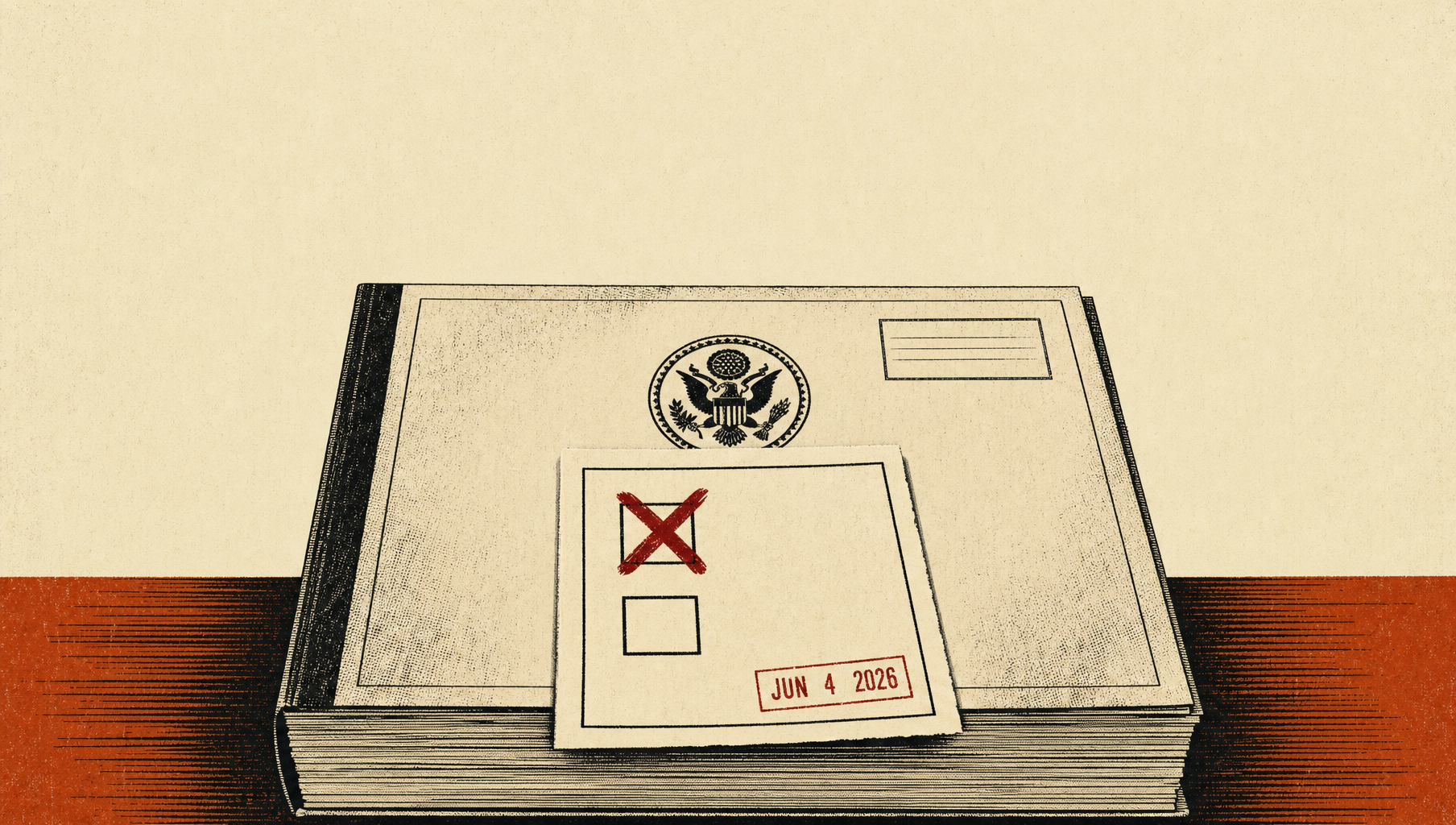
Washington moved to freeze the states' AI laws on Thursday. The same day, the actors ratified the strongest AI protections in America — the ones they wrote themselves.
On Thursday, June 4, two rooms in two cities finished two rulebooks for the same machine. In Washington, Reps. Jay Obernolte and Lori Trahan released a 270-page draft called the Great American AI Act, a bipartisan plan to freeze for three years the state laws that govern how AI models get built. In Los Angeles, SAG-AFTRA announced its members had ratified their new contract, 91.4 percent to 8.6 — the most complete AI-replacement protections any American union has ever won. A producer may use a synthetic performer only if it brings "significant additional value" over a live actor, and an arbitrator stands behind the clause. Same country. Same day. Government and union, both claiming to protect the American worker — same stated goal, two very different paths.
What people saw this week was the reaction split, and the lineup is the story. Within a day, Randi Weingarten, president of the teachers' union, and Sara Nelson, president of the flight attendants' union, issued a joint statement that opened with two words: "Hard no." Public Citizen called the draft "a disastrous proposal that Big Tech is celebrating." Americans for Responsible Innovation called preemption a "generational mistake." One organization welcomed it warmly: the Information Technology Industry Council — Big Tech's own trade group. When the unions say no and the lobby says yes inside the same news cycle, they are telling you who the document was written for.
The story they are selling is one national framework instead of fifty. Rep. Erin Houchin put it plainly: America should lead the world in AI, "not regulate ourselves into falling behind China through a patchwork of fifty different state laws." And the draft offers real things in trade. The biggest labs would have to publish safety frameworks, write risk plans before releasing new models, and report incidents that threaten life. A standards center gets funded. The Census and the Bureau of Labor Statistics would finally start counting AI's effect on jobs. It is narrower than last year's version, it sunsets in three years, and it promises the states keep their power over how AI is used. On paper, a reasonable deal.
The story underneath is that this is the third run at freezing the states in twelve months, and the assurance at the center of the deal was broken before it was offered. Round one: a ten-year moratorium slipped into the 2025 budget bill, stripped by the Senate 99 to 1 after unions and 36 state attorneys general objected. Round two: the Justice Department joined xAI's lawsuit against the Colorado AI Act in April; a federal court suspended the law within weeks, and Gov. Jared Polis signed the repeal on May 14. Round three arrived this week — an executive order on Tuesday, the draft on Thursday. Three venues. One answer, reached independently in each. The one consistent loser is the rulebook written to protect the worker.
Here is the part worth reading twice. The draft promises that states keep their authority over AI use — only development gets frozen. But Colorado's dead law was a use law. It regulated employers pointing algorithms at hiring and firing, and it was the only statute in America that required anyone to use reasonable care that the algorithm doesn't discriminate before pulling the trigger. The federal government sued it to death anyway. The same coalition now asks workers to trust that line. And what the draft offers in exchange are disclosure duties, not conduct duties — publish a framework, report an incident. Nothing in 270 pages requires anyone to verify that the system aimed at your job is fair before it fires.
The next twelve to eighteen months are a footrace. The draft is collecting public feedback now and will be introduced after; if it passes, the three-year clock runs through the steepest deployment curve on record. The states can see the window closing and are sprinting through it — California moved thirty AI bills through committee this week, Illinois sent five to Gov. JB Pritzker's desk, Vermont banned therapy bots, and roughly 2,081 AI bills are pending across the fifty states. Meanwhile the contract the actors ratified runs from July 1, 2026 to June 30, 2030. Read those dates against the freeze: the rulebook written at a bargaining table outlasts the one written in Washington.
What to do this week. The Great American AI Act is a discussion draft, which means its authors are formally asking for public input before it becomes a bill — at GAAIA@mail.house.gov, an inbox congressional staff actually read. Two paragraphs from a named person in a named trade in a named town, saying which state protection you are not willing to lose, outweighs a thousand form letters. And if you live in California, Illinois, New York, or Vermont, your legislature is moving AI bills right now. Call. Every law passed before a freeze is a fact on the ground that survives it.
One hundred sixty thousand actors now hold protections with teeth, and they did not get them from Congress. They got them by organizing as if their jobs depended on it, because their jobs did. The other 160 million working Americans were counting on laws like Colorado's — and watched one die in the spring. The ones replacing you don't know your name, and neither do the ones deciding which rules about your replacement get to exist. The only rulebook that held this week was the one workers wrote themselves.
— Stay Human ★
Get the Dispatch every Sunday.
Free. One issue a week. Forever — until you unsubscribe.