
On Tuesday, Seattle became the largest city in America to pause the AI buildout. The sharpest testimony came from Amazon's own engineers.
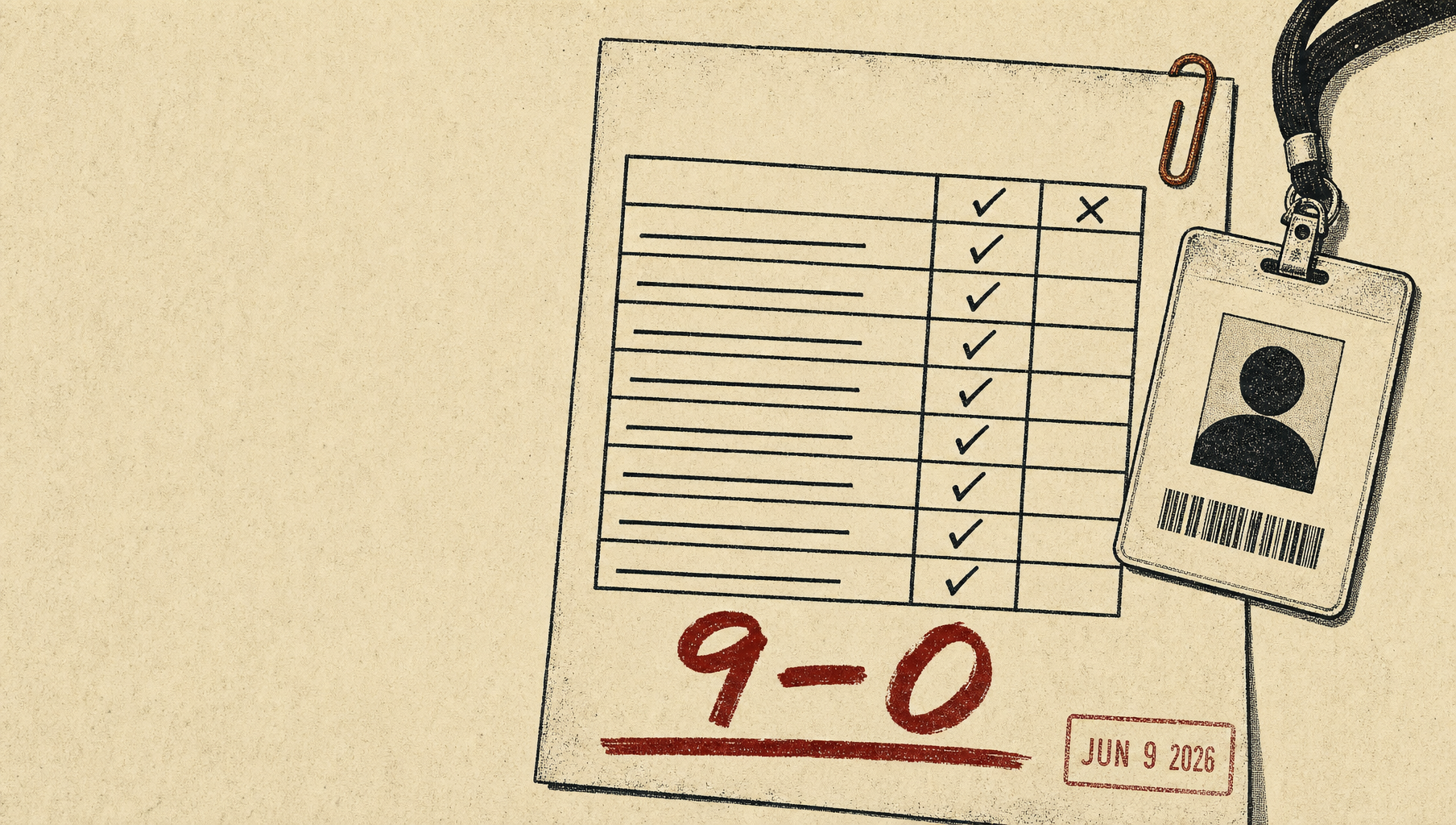
On Tuesday morning, June 9, more than fifty people lined up to testify at Seattle City Hall. Teachers from the Seattle Education Association. Hotel and hospitality workers from UNITE HERE Local 8. Climate organizers, retirees, neighbors worried about what five new data centers would do to their City Light bill. And engineers from Amazon, on the record and on camera, testifying about the buildout their own employer is funding. Across hours of public comment, not one person spoke for the data centers. When the council voted, it voted 9-0: an emergency moratorium on new large data centers, effective immediately, in the city that built the cloud. Seattle is now the largest city in America to pause the AI buildout. Mayor Katie B. Wilson said she looks forward to signing it.
The footage worth watching came six days before the vote. At a June 3 committee hearing, Patrick Schloesser, a software engineer with six years at Amazon, stood at the podium and did the math on his own company. "It's been reported that this year, Amazon is spending $200 billion on capital, with most of it going to data centers and AI… Meanwhile, the leaders at my company have laid off 30,000 corporate employees in the last eight months." His colleague Liesl Wigand, a senior engineer, followed him: "Let's not let Big Tech burn Seattle to win the AI race." The people who build the machine, asking their own city council to check it.
The numbers that forced the vote are simple. In April, four companies approached Seattle City Light about siting five large data centers with a combined demand of 369 megawatts. That's the electricity of roughly 300,000 homes, in a city of about 750,000 people. The council's answer, sponsored by Council member Eddie Lin, freezes any new facility over 20 megavolt-amperes for a year while the city studies what the buildout does to the grid, the water, the rates, and the jobs. "Seattleites should not be subsidizing record profits of large corporations from the AI boom," Lin said.
The story the industry is selling is inevitability. Seven hundred billion dollars of data-center spending this year, seven trillion by 2030, a race against China that no city council has the right to slow down. A federal energy official went on Seattle talk radio to call the moratorium a national-security mistake. Microsoft's chief executive says the newest data centers drink less water in a year than a restaurant. Amazon says it will be "water positive" by 2030, and besides, it never planned to build inside Seattle city limits anyway.
Here's the story underneath: the people closest to the machine trust it least. The city that hosts Amazon's headquarters, the original company town of the cloud era, just voted unanimously to pause the buildout, and the most damning testimony came from inside the company. Seattle isn't an outlier either. It's the crest of a wave. On June 2, voters in Monterey Park, California approved the first permanent municipal data-center ban in the country with 86 percent of the vote. Baltimore, Denver, and Minneapolis all passed pauses inside the last month. Data Center Watch counted 75 projects worth about $130 billion blocked or delayed in the first quarter of 2026 alone, the most in any quarter since it started counting, with active opposition groups doubling to 833 across 49 states. Gallup asked Americans about data centers for the first time this spring and found 71 percent don't want one near them. Record capital spending and record local rejection are the same quarter's numbers.
What's coming next is a footrace, and we should be honest about the course. Seattle's ordinance requires a public hearing within 60 days, and permanent zoning rules are expected by early 2027. Fourteen state legislatures are weighing data-center restrictions, and more than 300 data-center bills hit statehouses in the first six weeks of this year. But these are votes, not wars won. Amazon says it wasn't building in Seattle anyway, and two developers had already backed off before the gavel fell. In Saline Township, Michigan, the local board rejected a $16 billion OpenAI facility, got sued by the developer, settled, and the bulldozers are running. And while city halls pass guardrails 9-0, Washington spent the week negotiating whether states should keep the right to write their own AI rules at all. Zoning likely sits outside that deal's reach, but the pattern it's aimed at is exactly this one: people deciding things close to home. A vote can be litigated around. It can also be repeated, in 833 rooms and counting.
What to do this week: find the nearest land-use calendar. If you're in Seattle, the public hearing is required within 60 days, and the room that was full on June 9 needs to be full again. Everywhere else, pull your county's next planning-commission or board-of-supervisors agenda before the data-center item on it gets decided. If you're in Virginia, The Hum lists every data-center hearing on the calendar, with dates and addresses. Then copy the Seattle playbook: one endorsement letter, fifty organizational signatures, teachers next to hotel workers next to engineers. Two paragraphs at a podium in your own town beat a thousand reposts. And if you work inside one of these companies, Schloesser and Wigand just showed everyone what employee testimony does to a vote.
They told us the buildout was inevitable. Then the company town walked into the company's hearing, said no politely, with receipts, and the vote came back unanimous. Inevitable just lost, 9 to 0.
— Stay Human ★
Get the Dispatch every Sunday.
Free. One issue a week. Forever — until you unsubscribe.