
Two AI CEOs softened their bloodbath warnings the month they filed for IPO. The workers cut in 2025 did not get a revision.
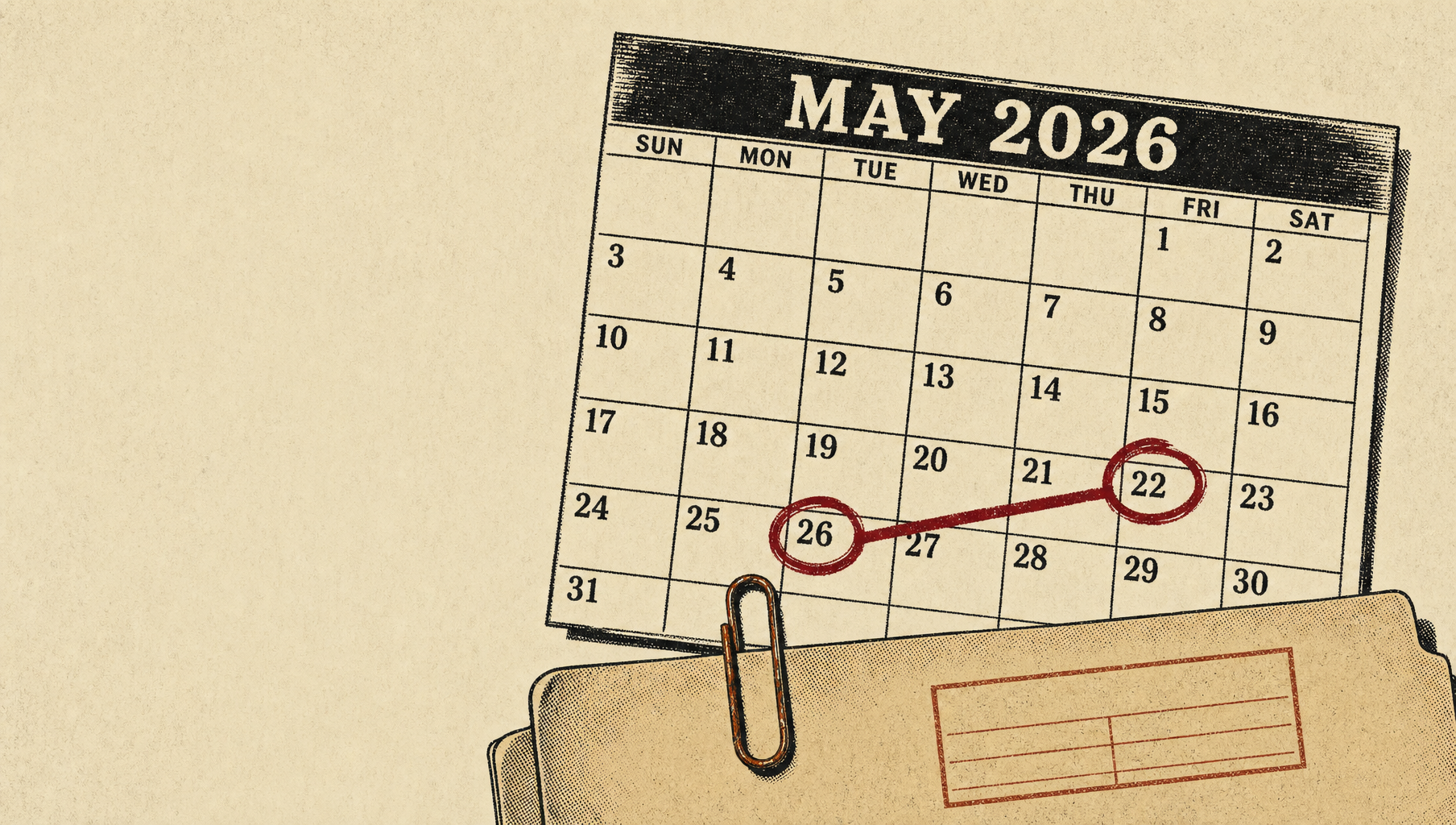
"I'm delighted to be wrong about this." That was Sam Altman on Tuesday, May 26, by video link at a banking conference in Sydney, in front of about a thousand big investors. "I thought there would have been more impact on entry-level white-collar jobs being eliminated by now than has actually happened." Then the closer: "I don't think we're going to have the kind of jobs apocalypse that some of the companies in our space advocate or talk about."
Four days earlier, on Friday, May 22, OpenAI quietly filed the paperwork to sell shares to the public — the form, called an S-1, that every company files before going on the stock market. Wall Street's biggest banks are running the deal. The plan is to be trading by year's end at a price tag between $852 billion and a flat trillion dollars. Walmart, the biggest private employer in America, is worth less than $800 billion.
The same week, Dario Amodei of Anthropic reached for a different story. His 2025 line — that AI could wipe out half of all entry-level white-collar jobs and push unemployment to 10% or 20% inside five years — has been replaced with a softer one. Automation, he told a press briefing, makes people more productive, not unemployed. "If you automate 90% of the job, then everyone does the 10% of the job. And the 10% kind of expands to be 100% of what people do." Anthropic raised $65 billion the same week at a $965 billion price tag and is expected to file its own S-1 by August 31.
In plain English: the two CEOs who gave the press its 2025 bloodbath script are handing it a different one in the quarter they file. What changed in plain sight is not the layoff numbers. What changed is the paperwork.
The room that benefits is small and named. The banks running the deal. The early investors waiting to cash out. The big-money buyers in the Sydney ballroom. A CEO talking down the layoff story four months before he starts selling stock is not breaking ranks. He is on script.
The room that pays is large and unnamed. The same May produced the largest single month of tech layoffs of 2026 — roughly 28,000 cuts. Meta announced about 8,000 on May 20. Wix cut more than 1,000. Groupon, 400 of 1,700. LinkedIn, 875. Cloudflare, 1,100. The press releases said AI is the reason. The legal layoff notices said nothing. In New York, where companies now check a box if AI drove the cut, 162 notices were filed in the first year. Zero checked the box. The press release protects the stock price. The legal form protects the company from being sued. The CEO speech protects the stock sale.
The honest counter. The Yale Budget Lab's March update found no clear sign that AI is moving the labor market yet. There is a real economic argument that cheaper tools grow the work instead of killing it — cheaper cloth meant more cloth, cheaper steel meant more steel. We will not pretend it is not on the record.
But the worker cut in 2025 does not get a take-back. The 162 New York notices with no AI box checked include the exact jobs Amodei named on camera in 2025 — entry-level consultants, lawyers, financial professionals. They got the cut. They did not get a reason on the form. They did not get a 2026 walkback in their inbox.
The alternative is being built where it has always been built. Last Thursday, Lorena Gonzalez, president of the California Federation of Labor Unions, said it more precisely than any AI lab has: catastrophic job loss from AI is not inevitable, it is a political choice. The same week, the Alphabet Workers Union responded to the Meta cuts with four concrete demands — guaranteed severance, voluntary buyouts before forced layoffs, no rigged performance reviews used to manufacture cuts, severance as paid leave. That is what an alternative sounds like. It is not a CEO video. It is a list of demands written by people who can be fired.
Brad Garlinghouse of Ripple is worth holding alongside, with the same caveat. "Painting AI as the boogeyman is a travesty," he said at a crypto conference in Miami. "We're thinking about it as an unlock." Hope, not faith. He is one boardroom away from a different decision.
What to do this week. The federal layoff-notice rules are being rewritten at the U.S. Department of Labor. California is rewriting its own under an AI executive order from Governor Newsom. New York has a pair of bills moving through Albany. Each room takes public comment, and the staff reads it. Two paragraphs naming an industry, a trade, a town, or a wage floor that ought to be written in carry more weight than the form letters. Print the name. Print the trade. Print the town. Send it where the rule is being written.
The ones replacing you do not know your name. They also do not stick to one story about you. The story shifts with whatever ballroom the CEO is standing in. Our job is to remember what was said last year. Four days is not a long time. Long enough to file an S-1. Long enough to find a new vocabulary. Not long enough to forget.
— Stay Human ★
Get the Dispatch every Sunday.
Free. One issue a week. Forever — until you unsubscribe.