
They spent three years telling us AI would take our jobs. Now they're saying they were wrong.
Ask yourself why.
Sam Altman, May 2026, at a conference in Sydney: "I thought there would have been more impact on entry-level white-collar jobs being eliminated by now than has actually happened. I'm delighted to be wrong about this."
Delighted.
This is the same person who said "jobs are definitely going to go away." Who said entire categories of work would be "totally, totally gone." Who spent three years on a global press tour telling every audience that the labor market as we know it was ending.
Now he's delighted it hasn't happened yet.
Dario Amodei, CEO of Anthropic, same month. In 2025 he told Axios that AI could wipe out 50% of entry-level white-collar positions within five years and push unemployment to 20%. Now, at a press briefing in Manhattan, he's invoking the "Jevons Paradox" — the idea that if AI does 90% of a job, people will just do the remaining 10%. Everyone keeps working. Nobody loses anything.
Two CEOs. Both spent years issuing the same warning. Both reversed course within weeks of each other.
Here's what else happened within weeks.
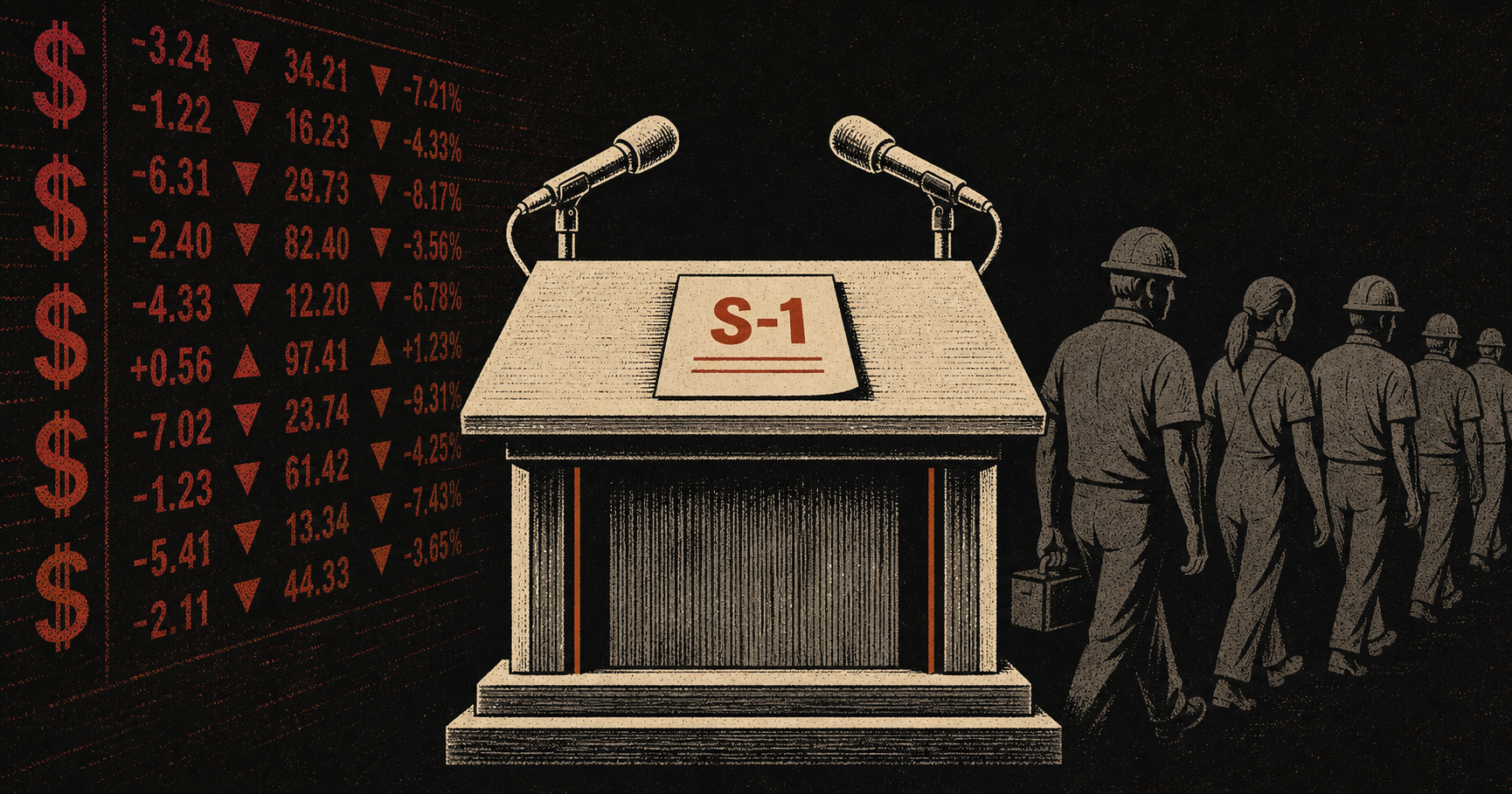
OpenAI filed a confidential S-1 with the SEC on May 22nd. They're targeting a September IPO at a valuation above one trillion dollars. Goldman Sachs and Morgan Stanley are leading. It would be the largest technology IPO in history.
Anthropic is reportedly pursuing the same path.
You cannot take a company public on a narrative of "we are going to eliminate half of all white-collar jobs." That's not an investor pitch. That's a congressional hearing. That's a regulatory review. That's a protest outside your roadshow.
So you change the story. Not because the technology changed. Not because the data changed. Because the financial event changed.
The walking back isn't a correction. It's a rebrand.
And here's the part that should make you angry.
While Altman was telling Sydney he was "delighted to be wrong," 113,000 tech workers had already been laid off in 2026. Across 179 companies. 48% of those companies explicitly cited AI as the reason for the cuts. Meta. Amazon. Snap. Not small shops. The biggest names in the industry, telling their own employees that AI made them redundant — while their CEOs tell the press that the job apocalypse never came.
The Yale Budget Lab says there's been "no meaningful change in unemployment rates for AI-exposed workers" since ChatGPT launched. And that's true — at the macro level. But macro numbers don't capture the 28-year-old copywriter who got replaced by a prompt. They don't capture the customer service team that got cut to three people and a chatbot. They don't capture the entry-level roles that simply never got posted.
The jobs aren't disappearing in a wave. They're disappearing in a whisper. One req at a time. One "restructuring" at a time. One "efficiency gain" at a time.
And now the people who told us it was coming are telling us it isn't. Right before they ask the public markets for a trillion dollars.
The receipts:
Sam Altman, 2023: "Jobs are definitely going to go away."
Sam Altman, 2024: Some job categories will be "totally, totally gone."
Sam Altman, May 2026: "I'm delighted to be wrong."
Sam Altman, also May 2026: Files for the largest tech IPO in history.
Dario Amodei, 2025: AI could "wipe out 50% of entry-level white-collar positions" and push unemployment to 20%.
Dario Amodei, May 2026: Actually, everyone will just do the remaining 10% of their job. It's called the Jevons Paradox.
113,000 tech workers, 2026: Laid off. 48% told AI was the reason.
They didn't change their minds. They changed their audience.
When they were talking to investors and engineers, the pitch was: this technology replaces people, which means margins go up, which means your shares are worth more.
When they're talking to regulators and the public ahead of an IPO, the pitch becomes: actually, nobody's losing their job, this is all very safe, please don't interfere.
Same technology. Same trajectory. Different room, different story.
The walkback isn't evidence that AI won't take jobs. It's evidence that the people building it know exactly what it does — and they've learned when to say so and when to shut up about it.
When they talk, listen.
When they stop talking, listen harder.
Stay Human ★
Stay informed to prevent our replacement
Get the Dispatch every Sunday.
Free. One issue a week. Forever — until you unsubscribe.