
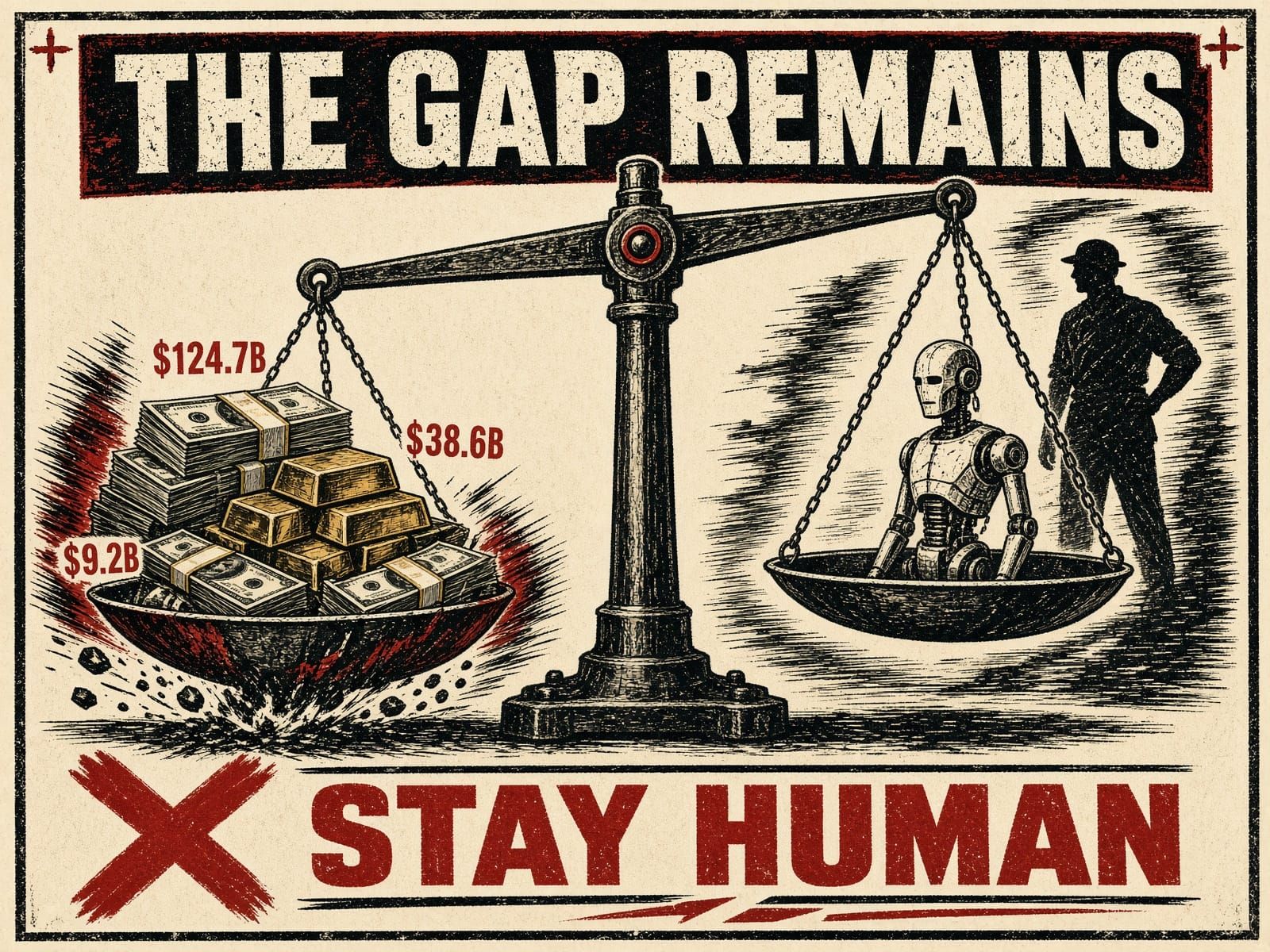
Capital keeps arriving. Model updates keep arriving. Manufacturing claims keep arriving. Verified readiness does not.
In the first half of 2026 alone, investors put more than four billion dollars into humanoid robotics startups. Chinese firms livestreamed robots on active production lines and published success rates in the high nineties. Xiaomi reported 98 percent on narrow stations after months of iteration. Agibot claimed near-perfect completion across tens of thousands of tasks and announced its 15,000th unit shipped. Google released whole-body control models. Tesla converted factory lines and restated ambitious internal targets. Figure continued pilots with logged hours at BMW and logistics sites.
None of that closes the gap that decides whether a machine is ready to stand next to a human for a full shift.
The numbers that still do not appear in public are the ones that matter for safety and reliability: unsupervised continuous hours under real variation in lighting, layout, and task order; measured contact or near-miss rates when people walk past; success rates when the gripper or sensor encounters something outside the training set; and the actual fall or collapse data in proximity to workers. Stage failures get reframed as “safe-collapse sequences.” Dance and performance falls circulate, then get treated as isolated demo glitches. An airport patrol robot tumbles down stairs during a test. Regulatory frameworks are still catching up—San Mateo County’s first humanoid permits require kill switches, fire rules, and labor tracking, but they arrived after deployment announcements, not before. Labor resistance at Hyundai over planned Atlas units is treated as a temporary obstacle instead of a signal that the people on the floor do not trust the readiness claims.
Specialized robots already handle many of these tasks with higher reliability and lower complexity. The humanoid form factor remains a marketing choice until the numbers prove otherwise. Capital can fund production lines and supply chains. It cannot substitute for the missing performance data. When companies announce replacement timelines or scale targets while the unsupervised reliability and proximity safety numbers stay thin, they are asking workers and regulators to accept the risk first and the proof later.
That is the wrong order.
Humans designed the factories and warehouses these machines are being asked to enter. The burden of proof sits with the machines. Performance data and safety in shared spaces before scale. Specialized where it earns its place. Humans first.
—
Shareable line:
“Capital and demos keep arriving. Verified readiness does not. That gap is still the only metric that matters.”
Call to action:
Sign the Roster if you refuse to accept replacement as inevitable.
Stay human.
Get the Dispatch every Sunday.
Free. One issue a week. Forever — until you unsubscribe.