
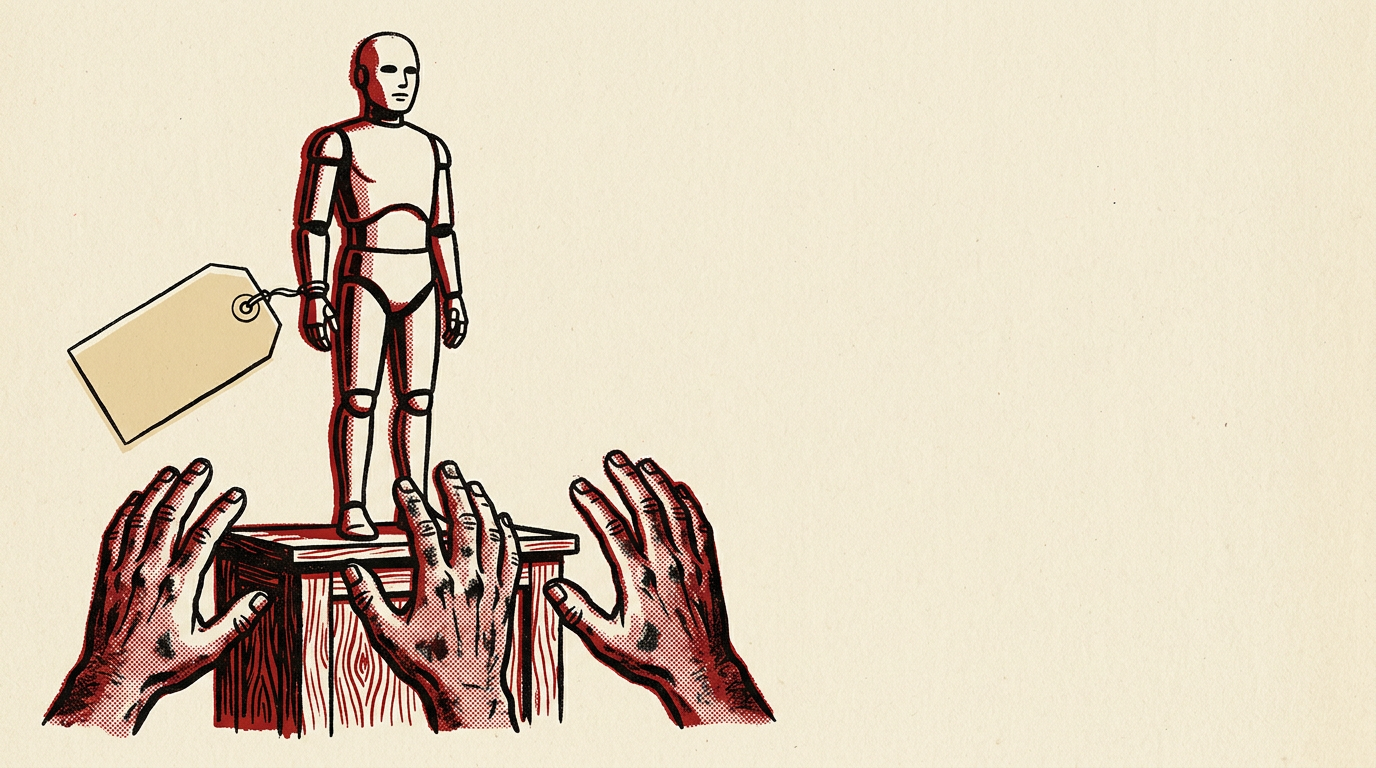
This week the open market put its first real price on a humanoid company. The amount of money people were willing to put down says more than any demo stage would.
On Thursday, on the floor of the Shanghai STAR Market, the world got its first honest number for a humanoid robot company. Unitree, the Hangzhou maker that ships more of these machines than any other company in the solar system, priced its IPO at 150.80 yuan a share. Making the total valuation to be 61 billion yuan, roughly $9.04 billion, and raised close to $904 million on the way in. For the first time, millions of buyers and sellers with real money on the line had to agree on what one of these companies is worth.
Here is what we saw this week. A valuation ladder, clean and vertical: Figure AI at $39 billion, 1X Technologies near $10 billion, Unitree at $9 billion, Apptronik around $5.3 billion. Anchors read it as a scoreboard of the inevitable, proof the machines are marching off the demo floor and onto your spot on the factory floor. Big money, big robots, and your job somewhere under the wheels.
Now take a look from another angel, which is the way the market actually built it. The most expensive company on it has the least to show. Figure carries a $39 billion private price set last September and has never disclosed a dollar of revenue. Unitree, priced at a quarter of that, is the one that actually builds and sells: more than 5,500 humanoids shipped in 2025, revenue up past $235 million, gross margins near 60 percent, one of the only profitable makers on earth. The company that ships is worth a fraction of the company that mostly promises. Strip the story off the numbers and the market just told you the humanoid trade is not yet a business of robots doing work. It is a business of selling the belief that they soon will.
The man whom's company just went public for nine billion has said as much himself. A year ago Wang Xingxing, Unitree's founder, told Bloomberg the machines still lack the AI to do what the pitch decks promise. And in an interview published by ChinaTalk, he laid out the destination plainly, as his own stated vision: governments could deploy a hundred thousand humanoids, build a brand-new city, hand out housing for free, and "ordinary people wouldn't even need to work." That is the paradise being sold. A world with your labor removed, narrated as a gift, by the person who just got rich building the thing that removes it.
The floor under that abstraction is cheap, and that is the part that should stop you. A base G1 lists around $13,500. That is less than a single year of a warehouse or cleaning wage across most of the country, and a facilities manager can do that math in his head in a second, even the less intellectually gifted ones. Truth be told he already did it. G1 units are moving baggage at Tokyo Haneda, running floor-cleaning routes for YY Group, riding along with a U.S. sheriff's department that bought one in July. The jobs in the blast radius are the same ones this year's layoff ledger keeps naming: baggage handlers, cleaners, pickers, the floor. Inside Unitree's own factory, G1 robots now assemble the motors that go into the next G1. The machine built to replace the worker is increasingly built by the machine, and nobody on that line is on the cap table that just cleared nine billion dollars.
We will say the part that cuts against us, because we are not in the business of selling you certainty either. The honest case for the buildout is that it aims at a real hole. Manufacturers count more than 600,000 unfilled jobs, and over half a trillion dollars in reshoring has been committed since 2021 that the labor market cannot staff. In that light a humanoid fills a vacancy instead of emptying a desk, and one industry survey found 57 percent of manufacturers say robots work alongside people rather than replace them. The bull will also tell you Unitree's "low" price is just a China discount on a listing walled out of the U.S. by FCC order, not evidence of a bubble. Both points are fair, and we will carry them straight.
Here is where they thin. Even sympathetic analysts concede the reshoring wave may not produce the jobs it advertises, because humanoid output is projected to pass human workers within a few years, which is the quiet half of the augmentation pitch. And an unfilled forklift shift in one town does not refund a content-moderation desk cut in another. A machine bought to fill a gap and a machine bought to close a wage are the same machine on the invoice. Which one it turns out to be gets decided in a boardroom the worker never sees, on a spreadsheet where a $13,500 line beats a salaried one every quarter.
What to do this week is small, lawful, and time-bound. In the days right after this goes out, the California Assembly Appropriations Committee takes up California SB 951, the ninety-day-notice bill, and the No Robo Bosses Act, the week of August 11. If you live in California, call your Appropriations member's office before the vote and tell them to move both off suspense. One call, no money, no membership card. If you live anywhere else, find the disclosure bill in your own statehouse, New York's is still sitting unsigned, and ask your representative where they stand. Keep it to that: a phone call and a vote.
Because here is the whole thing in one line. The market can price the replacer to the decimal, margins, share count, a $20.8 million line for DeepSeek's slice of it, while the 205,832 people cut this year get no number, no notice, no line item at all. We know exactly what the machine is worth. We still refuse to write down what the worker was.
— Stay Human ★
Get the Dispatch every Sunday.
Free. One issue a week. Forever — until you unsubscribe.