
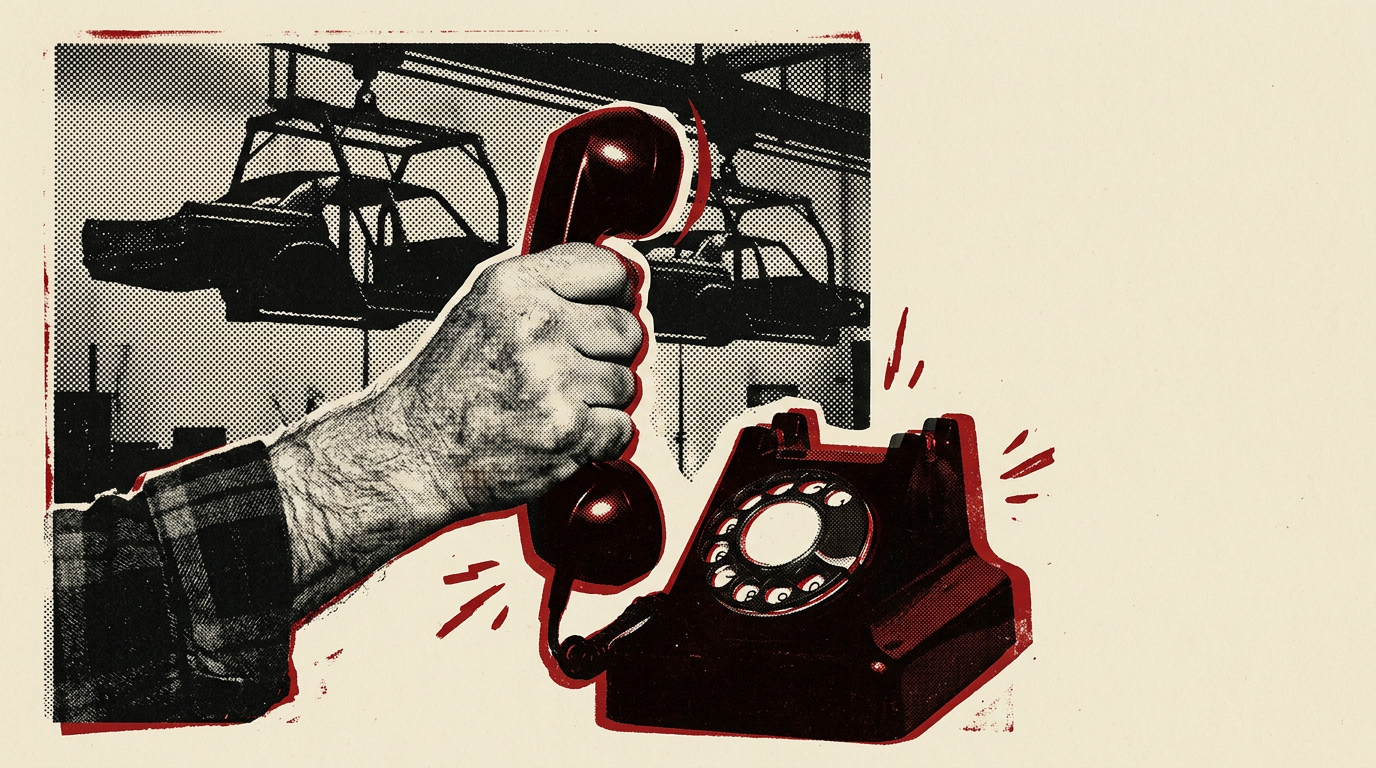
Ford spent three years calling back the engineers its AI was supposed to replace. They aren'y the only company quietly regretting replacing critical employees.
In Dearborn, Michigan, Ford has spent the last three years making phone calls they never expected to make. The company is calling veteran engineers, people they call "gray beards", some retired, some pushed out, and asking them to come back. About 350 in total. They were the ones the AI design and quality systems were supposed to make unnecessary. Then those systems kept shipping defects, and the defects kept landing as recalls in customers' driveways. Charles Poon, Ford's vice president of vehicle hardware engineering, put it on the record with Bloomberg in late June: "Mistakenly, we thought that by just introducing artificial intelligence and ingesting the design requirements that we had, that would produce a high-quality product." The gray beards now spend their days fixing the warranty holes, teaching the younger engineers, and retraining the software that was hired to replace them. This year Ford topped the JD Power Initial Quality Survey among mainstream brands for the first time in sixteen years, and CEO Jim Farley credits the program with hundreds of millions in savings.
That story didn't go viral. Here's what did. On July 1, Elon Musk posted himself walking the Optimus production line at Fremont, and the clip did huge numbers. The day before, UBTECH launched its UWORLD U1 in Shenzhen, billing it as the world's first full-size mass-produced humanoid, with a "reported" order book above 13,361 units at prices starting around $17,700. If your feed looked like ours this week, it said one thing: the machines have arrived, the production lines are running, mass production is here, and your replacements are ready.
The corporate fiscal games have always worked like that. Announce the AI layoff loudly, call it transformation, the stock rises for a better quarterly report. The replacement is inevitable even if it isn't truly ready, so the cut was responsible. That's the story the C-suite sells.
The story underneath went on the record this week too, and it is fairly damming. On July 1, CNBC published survey data from staffing firm Robert Half: of 2,000 US hiring managers, 32 percent said they eliminated a role primarily because of AI and have since rehired for the same or a similar position. Finance led at 44 percent. A Robert Half executive told Fast Company that companies that moved too fast "are now seeing where it falls short in practice." A separate survey by outplacement firm Careerminds found two thirds of companies that ran AI-driven layoffs have started rehiring, and over a third of those brought back more than half the roles they cut. The receipts are piling up. Klarna bragged in 2024 that its AI assistant did the work of 700 agents, then its CEO admitted the push had chased cost over quality and began hiring people back. IBM paused hiring in 2023 for roles AI could allegedly do; this February its own HR chief, Nickle LaMoreaux, announced the company would triple entry-level hiring, saying the winners three to five years out will be "those companies that doubled down on entry-level hiring in this environment."
Now watch how the correction is being handled, because that's the part that concerns us. Forrester reported last October that 55 percent of employers who swapped workers for AI already regret it, and predicted that half the rehiring would happen quietly, offshore or at lower pay. Gartner forecasts that by 2027, half the companies that blamed AI for cuts will rehire for similar functions under different job titles. They are going to burry the rehires under different titles, lower salaries, and on other continents. The worker was subtracted in a press release and is being added back in the dark, and the point of the darkness is that the original decision never has to be accounted for. To be clear about what the data doesn't say: nobody promises the people rehired are the people who were cut. For a rep in Louisville or a clerk in Dayton, this isn't vindication. It's watching your own desk come back on a job board with a new name on the listing and a smaller number at the bottom.
The next twelve to eighteen months will be telling. The clocks on those 2024 and 2025 layoffs are ringing now, and the reposted listings will keep surfacing one at a time, retitled and discounted. Meanwhile the hardware version (physical AI) of the same bet pours its foundation anyway. The verdict on the software experiment arrived at the exact same time that the assembly line for humanoids was staged for the cameras. And when a fan theorized that Tesla was secretly ahead of schedule, Musk himself answered on July 1: "No, Optimus production will be extremely slow at first, as everything is new. This is not like making a car." Read that twice. He said the quite pare out loud, and the buyers are still booking the savings because the reward comes the quarter they fire you. There seems to be little accountability in the quarter they rehire someone else to do your job for less money.
What to do this week: keep receipts. If you were laid off with AI named as the reason, set a job alert today for your old role at your old company. When it reappears under a new title, screenshot it, date it, and send it to your former coworkers, to your union if you have one, to your congress person, and to us. The rehire wave runs quiet because quiet protects the people who signed the cut. A stack of dated screenshots can help bring their practice to the light. And if you're still employed and a vendor promises a system will replace your team, forward the Ford story to the one signing the contract.
Big business ran the experiment on millions of livelihoods. The results came back, in their own words: the humans were the part that worked.
— Stay Human ★
Get the Dispatch every Sunday.
Free. One issue a week. Forever — until you unsubscribe.